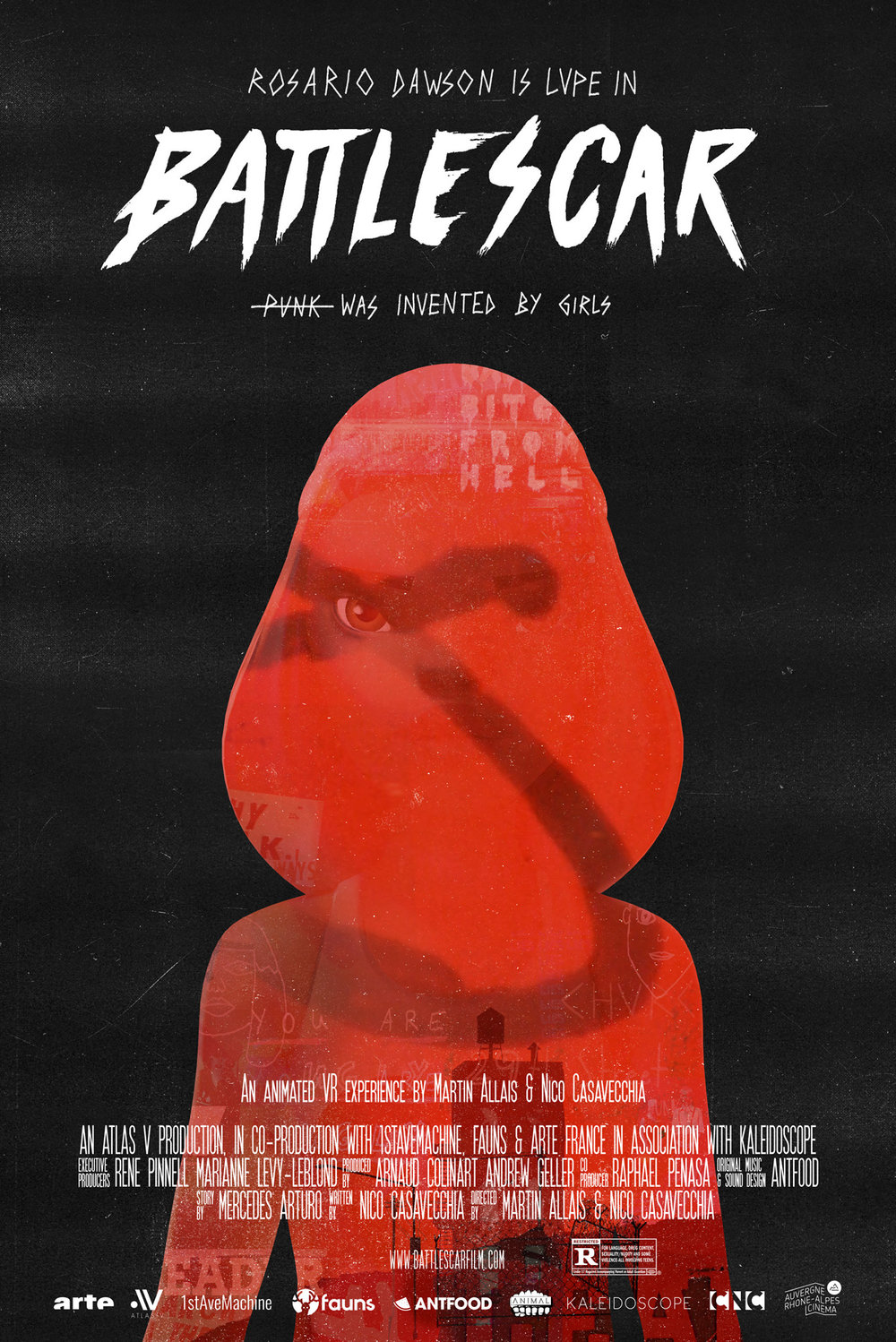
Battlescar is not a new project, it is a VR narrative short film from 2018, but I decided to start with this project because this is the type of story I want to see more of in VR. This is a 3-D animated short film broken into three chapters about two girls, Lupe and Debbie, who form a punk band. The entire short film is narrated by the character Lupe as if she is reading from her diaries, so it is more like a first person audio drama with visuals than a traditional third person narrative movie script. Still, it works as a unique movie experience in VR.
The environments in this animation are dark and moody and this really helps draw your eye from one scene to the next. This helps editing because when you control where the viewer looks, the cuts are less jarring. Battlescar edits liberally and it makes the experience more engaging.
The story feels like an authentic exploration into the creation process. Lupe is a poet and Debbie has ambitions in the punk scene, so together they decide to learn music and get their truth out there. But they don’t know exactly where to start. So they find a famous musician, score her some drugs and in exchange, she helps them learn how to use the guitars and create some music.
The story itself is about thirty minutes long. It’s broken into three parts because it really does get difficult to watch something in VR for longer than ten minutes without a pause. But even the little pause gives us the break we need to watch this entire movie in one sitting.
I really enjoy that you watch the Battlescar narrative and never have to click anything arbitrary to continue on with the story. When I watch stories, I don’t want to have to do things to have the story continue. I will bring this up in some of my other reviews for projects like “The Line” and “Vader Immortal”, which force you to interact in order to let you “play” the narrative. Those projects are still interesting, but since I am not a gamer, I don’t really feel an intense need to solve some little puzzle when I am engaged in a story.
This is one of the difficulties of VR narratives: finding a way to engage the viewer without arbitrary tasks. Battlescar uses text on screen to emphasize story points, and this does a lot to keep your interest. Reading is engaging! But it’s not a technique that many narratives can incorporate. It works in Battlescar since this is a first person story, meaning it is told from Lupe’s voiceovers, and it also works stylistically with the punk style. I do think without the words on the screen, this story might not have moved along like it does. They add another element of editing and interaction.
Also, the story does use frames to enhance story elements and introduce close ups, which is not something you normally get in a 360/180 Degree experience. There are some polaroid snapshots within a journal that give you a 3-D look into another world, and then there are some clever comic book style panels that emphasize certain characters and their emotions while still giving you a big picture view. I found this usage to be clever and effective.
I’m a big fan of the frame in narratives because it offers perspective and adds emphasis, not to mention, it is the reason for the best tool in narrative storytelling – the close up! Many projects in VR want to find art that goes “beyond the frame” and I’m all for exploration, but most of the time, if you lose all the framing, you lose your voice and perspective. That certainly isn’t an issue with Battlescar, but it is in some other projects that try to include you as a character in the story.
Overall, Battlescar is one of the better narratives I have seen in VR.
Technical elements of Battlescar-
3 Degrees of Freedom (3DoF) – You are able to move your head and look around, but you remain in one place for the entire time. In experiences that are 6 Degrees of Freedom (6DoF), you are free to both look around and to move yourself through space by walking or teleporting around.
360 Degrees – This animation makes use of all 360 degrees (meaning you can look all around you), but only once in a while. Most of the time, the narrative is within your 180 degree field of view (so that you are generally looking forward and not looking over your shoulder or trying to see what’s behind you).
3-D Animation – The project is animated with 3-dimensional characters and objects. You feel like you are there in the environment with the characters.
Lean Back Entertainment – This is the kind of story where you sit in your seat and watch what is happening around you. This is my favorite type of entertainment!
 Mindweird
Leave a Reply